
Budgets are lean and marketing leaders are consistently asked to do more with less. And, when it comes to experiential campaigns some brands look internally first or turn to PR partners because, on the surface, events might feel like public relations.
But here’s the thing: experiential marketing isn’t PR; experiential is strategy brought to life. It’s where brand meets culture, consumer behavior, design, operations, data capture, and long-term relationship building. That’s a lot of moving parts. If you’re asking whether an experiential agency brings value beyond what a generalist team or a PR firm can do, the answer rings clear: “yes” and here’s why.
The Differences Between PR and Experiential Are Bigger Than They Sound
A PR agency earns media through storytelling and earned coverage. And, yes, that’s powerful. But experiential isn’t about media placement, it’s about human connection.
PR is focused on what gets written, shared, or talked about. Experiential is focused on what people do, feel, and remember. It’s about creating a lived moment that ultimately influences brand perception and drives business outcomes.
At Inspira, we’ve seen this firsthand. Tactics without strategy, like drive-by sampling or pop-ups without a real purpose, generate short-term visibility. They don’t open the door to long-term brand-consumer relationships. Experiential requires more: clarity of objective, audience insight, creative rigor, logistical orchestration, and measurement that goes beyond impressions to engagement and memory.
That’s not PR. That’s not in-house general marketing. That’s experiential expertise.

Strategy Comes First. Execution Comes Next.
One of the common pitfalls of doing experiential in-house is starting with tactics. You think “let’s do a booth” or “let’s do a mass sampling campaign” and then reverse engineer the strategy later. That’s backwards.
A strong experiential agency begins with:
- Business Objectives: What behavior are we trying to influence?
- Consumer Insight: What motivates the audience? What frustrations, desires, triggers do they have?
- Cultural Context: Where should we show up and what cultural currents can we lean into so the experience feels relevant and not random?
- Brand Messaging Alignment: How does the activation reinforce the brand’s purpose and broader narrative?
- Relationship-building beyond the event: How are content, social, influencer, paid, shopper, CRM and other marketing tactics integrated into the experiential ecosystem.
In other words, great experiential is strategic first, tactical second. Without that order, internal teams too often create stuff that happens without anything happening for the brand.
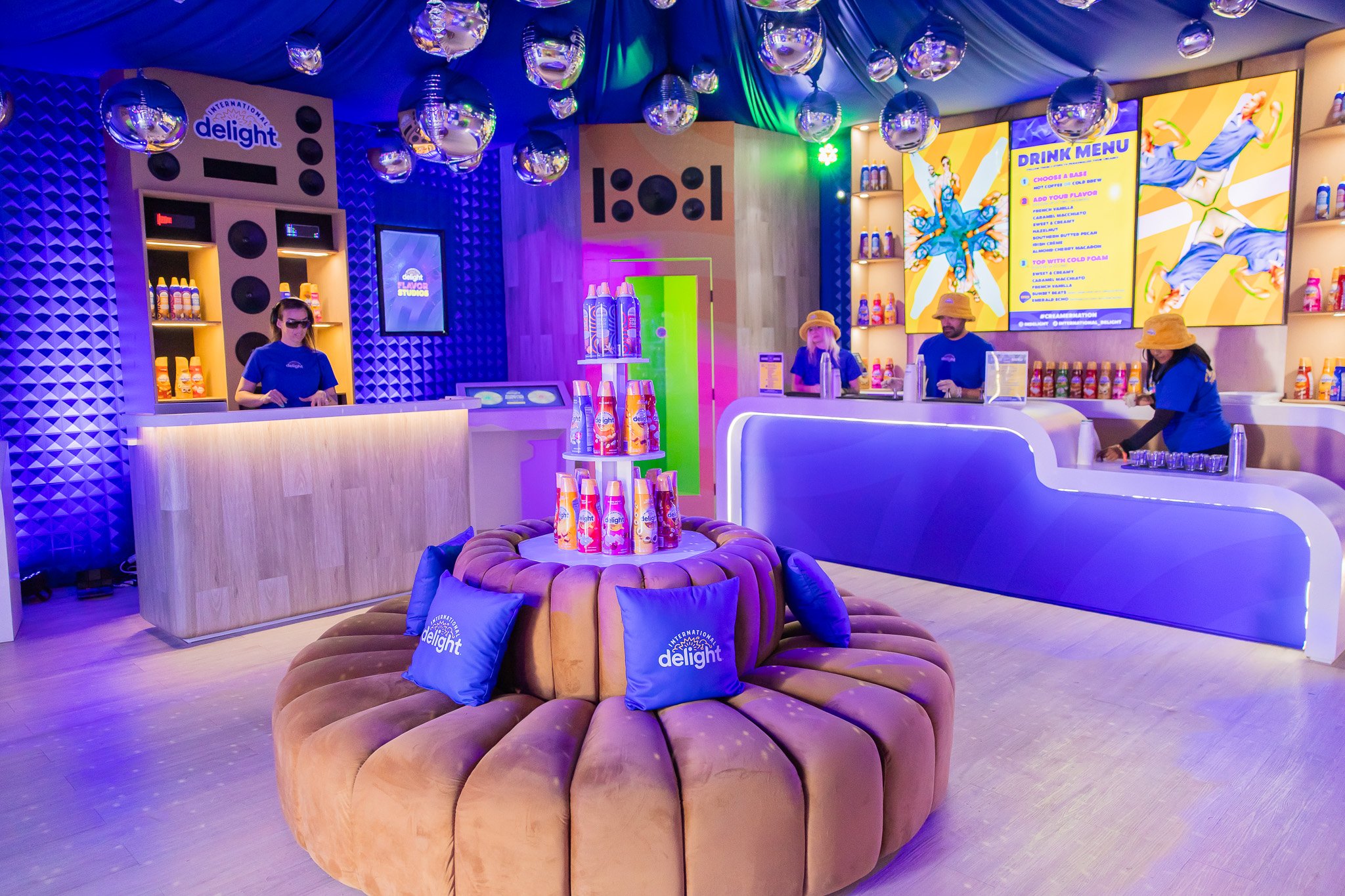
Execution Complexity Only Looks Simple from a Distance
On the surface experiential sometimes looks like one event. In reality, it’s a system of moving parts:
- Strategic venue selection
- Permitting and site expertise
- Production logistics and risk management
- Venue coordination and compliance
- Audience flow and environmental design
- Technology integration and data capture
- On-site staff training and human interaction design
- Measurement frameworks that prove value
These aren’t small tasks. They’re disciplines. An experiential agency has built a repeatable process, vendor relationships, and cross-functional teams that specialize in exactly this kind of orchestration. When brands try to manage this internally, it’s common to see overruns, missed opportunities for amplification, and a lack of capacity to measure beyond surface metrics. Frequently, these lead to overspending, logistics nightmares, and onsite staffing problems.
There’s also the risk of weather-related and other unforeseen problems. For example, when high winds impacted an experiential structure at a music festival, our team was able to work with a local vendor with whom we already had a relationship to shore up the structure and get it back in working order before the festival opened. Experienced experiential marketing professionals have seen it all before, they know what to look out for, how to avoid costly problems, how to design, what to measure, and how to recover quickly when the unexpected (inevitably) happens.

Creativity That Feels Human and Memorable
One of the things Inspira’s Chief Creative Officer Dave Wasserman has often underscored is that creativity without strategic grounding is surface level. Creativity should be purposeful. It should shape behavior. And it should echo a brand’s values long after the event ends.
Creative ideation in a vacuum rarely delivers that. But in a team that’s built for experiential, where strategic insight partners with craft and risk-taking, experiences become memorable for the right reasons, not just because they look good on TikTok. That nuance makes all the difference when you’re trying to build relationship memory instead of short-lived spectacle.
Perspective You Can’t Fake
Some of the most valuable contributions an experiential agency brings are perspective and courage.
- Internal teams often defend the brand the way a family protects a reputation. That’s noble. But it can lead to overly cautious activations that don’t push culture or surprise an audience.
- PR partners are fantastic at storytelling. But experiential storytelling is embodied, not just written.
- Agencies like Inspira that live and breathe experiential bring perspective on what works in the real world because they’ve tested it, scaled it, failed at it, and learned from it.
There’s a confidence and a steadiness that comes from experience. That’s why brands invest in specialized partners whose only job is to design and deliver experiences that drive measurable impact.
You can absolutely host a “brand moment.” But what you really want is a brand moment that matters; that matters to your business goals, matters to your audience, matters beyond a press placement or a few social shares.
And that is the difference Inspira delivers. Considering an experiential marketing activation for your brand? Let’s talk.
